So, you’ve found yourself at a classic crossroads in the world of high-end appliances. The Miele Vs Bosch Dishwashers debate is one for the ages, like choosing between two German luxury cars. Both are engineering marvels, both promise sparkling clean dishes, and both command a premium price tag. But which one truly deserves a place in your kitchen? As someone who has seen the ins and outs of countless dishwashers, I’m here to break it all down for you, no fluff, just the real-world differences that matter.
Let’s cut through the marketing noise and figure out which of these titans is the right fit for your home. We’ll dive deep into cleaning performance, drying technology, reliability, and that all-important price tag to help you make a decision you’ll be happy with for years to come.
A Tale of Two German Engineering Giants
Before we pit them against each other, it’s worth understanding the philosophy behind each brand. Both Miele and Bosch are steeped in a tradition of German engineering, which means precision, quality, and durability are in their DNA.
Bosch is a household name, known for creating appliances that blend high performance with excellent value. They are masters of quiet operation and have introduced some game-changing technology, especially in the drying department. Think of Bosch as the pragmatic perfectionist; they deliver 99% of what the ultra-premium brands do, for a noticeably lower price.
Miele, on the other hand, operates on a philosophy of “Immer Besser,” or “Forever Better.” They are renowned for their almost fanatical commitment to longevity. Miele tests its dishwashers to last for 20 years of average use. This is a brand you invest in, expecting it to be a part of your home for a generation.
The Miele vs Bosch Dishwashers Performance Breakdown
Alright, let’s get to the main event. How do these two stack up when it comes to the nitty-gritty of getting your dishes clean and dry?
Cleaning Prowess: Who Gets the Grime?
Honestly, you’re unlikely to be disappointed with the cleaning performance of either brand. Both use advanced sensor technology to detect how dirty your dishes are and adjust the cycle accordingly, saving water and energy.
- Bosch: Utilizes a combination of high-pressure jets and intelligent water distribution. Their PrecisionWash system uses sensors to scan the dishes throughout the cycle, targeting every item with a powerful spray. You’ll rarely find a spot they’ve missed.
- Miele: Miele’s system is all about comprehensive coverage. They feature a three-tiered spray arm system, ensuring water reaches every corner of the tub. Their higher-end models also boast a QuickIntenseWash cycle that delivers a full, proper clean in under an hour, which is a fantastic feature for busy households.
The real difference often comes down to the racking system and how well you can load it, which we’ll cover in a bit. For raw cleaning power on baked-on lasagna or greasy pans, both are top-tier contenders.
Drying Technology: The Bone-Dry Difference
This is arguably the biggest point of differentiation between the two brands and a huge factor in the Miele vs Bosch dishwashers decision.
Bosch has revolutionized dishwasher drying with its patented CrystalDry™ technology (available on their 800 and Benchmark series). This system uses natural minerals called zeolite, which heat up when exposed to moisture. The dishwasher pulls the damp air from the tub across the zeolite, which then releases hot, dry air back into the tub. The result? Even plastics come out bone-dry and ready to be put away. It’s seriously impressive stuff.
Miele takes a different, yet also effective, approach. Most Miele dishwashers feature AutoOpen Drying. At the end of the cycle, the dishwasher door automatically pops open a few inches. This allows the hot, moist air to escape and room-temperature air to circulate, letting dishes dry naturally without using extra energy. It’s simple, effective, and great for energy efficiency.
As an experienced appliance consultant, John Miller, once told me: “Think of it this way: Bosch uses active, high-tech heat to force everything dry right now. Miele uses a clever, passive technique that lets nature do the work. Both get the job done, but the ‘how’ is what sets them apart.”
Quiet Operation: The Sound of Silence?
If you have an open-concept living space, dishwasher noise is a huge deal. The good news is that both Miele and Bosch are leaders in silent operation.
Bosch has arguably built its reputation on being whisper-quiet. Many of their models are so quiet (some operating as low as 38 dBA) that they project a small red light, called InfoLight, onto the floor to let you know the cycle is even running.
Miele is right there with them, with models that are equally silent. You truly cannot go wrong with either brand if your primary concern is noise. The difference between 42 dBA and 40 dBA is practically imperceptible to the human ear.
Design, Build Quality, and Interior Flexibility
How a dishwasher feels to use every day is just as important as its performance. This is where Miele often pulls ahead, but Bosch is incredibly competitive.
Build Quality and Reliability
Both brands feel solid. You won’t find flimsy plastic parts here. However, Miele’s “tested for 20 years” promise isn’t just marketing. When you open a Miele dishwasher, the racks glide with a smoothness and stability that feels incredibly premium. They are built like tanks.
Bosch dishwashers are also incredibly reliable and consistently rank high in consumer satisfaction reports for having low repair rates. While they may not be explicitly tested for 20 years, it’s not uncommon for a well-maintained Bosch to last 10-15 years or more.
Racking and Loading: The Flexibility Factor
This is a category where personal preference plays a huge role.
- The Third Rack: Both brands offer a third rack for cutlery and small utensils, a feature that frees up a ton of space on the bottom rack.
- Bosch’s MyWay™ or Flex 3rd Rack is deep and versatile, allowing for small bowls, ladles, and ramekins.
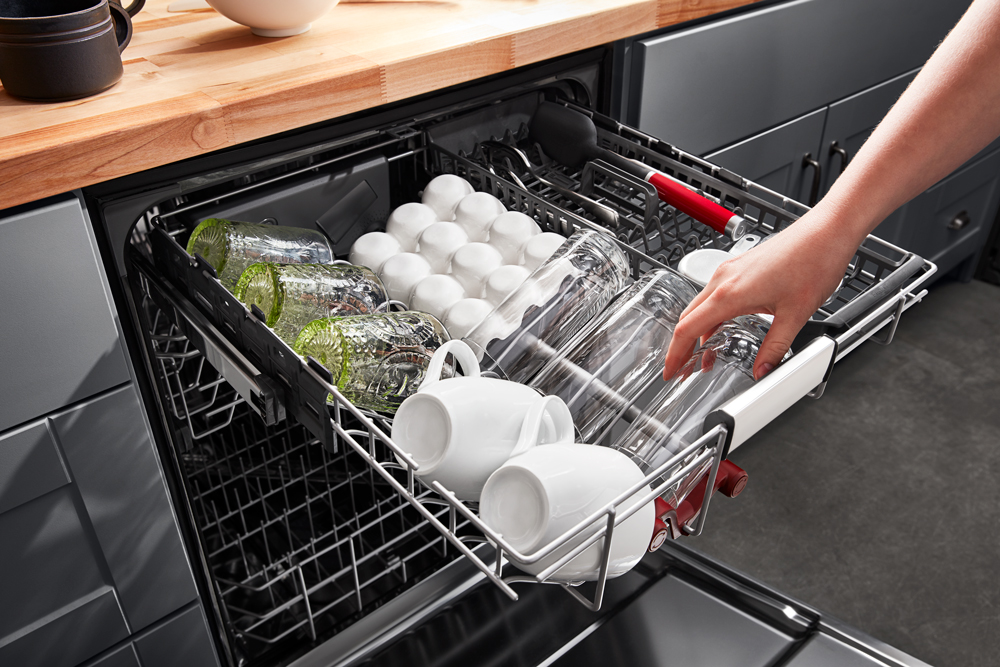
- Miele’s 3D MultiFlex Tray is a masterpiece of engineering. It has sections that can be lowered or shifted side-to-side, allowing you to fit tall wine glasses in the rack below while still accommodating various utensils up top. It offers a level of customization that is hard to beat.
- Adjustability: Miele’s racks often feature more adjustable tines and foldable sections, giving you more options for loading awkwardly shaped pots, pans, and platters. If you frequently wash a wide variety of items, Miele’s interior flexibility is a significant advantage.
The Price Tag: Is Miele Worth the Extra Cost?
Let’s talk money. There’s no way around it: Miele dishwashers are generally more expensive than their Bosch counterparts.
- Bosch: You can get into a fantastic Bosch dishwasher (like their 300 or 500 series) for a very reasonable price, offering incredible quietness and cleaning performance. Their premium 800 series with CrystalDry is more expensive but still typically costs less than a comparable Miele.
- Miele: Miele starts at a price point where Bosch’s premium models top out. You are paying a premium for the enhanced build quality, extreme longevity testing, and features like the 3D MultiFlex tray.
The question you have to ask yourself is: are you buying an appliance for the next 7-10 years, or are you investing in a machine for the next 15-20? If it’s the latter, the higher upfront cost of a Miele can be justified as a long-term investment.
So, Which Dishwasher Is Right For You?
The final verdict in the Miele vs Bosch dishwashers battle comes down to your personal priorities. There is no single “winner,” only the right choice for your needs.
You should choose a Bosch dishwasher if:
- Drying performance is your number one priority. CrystalDry is simply the best in the business, especially for plastics.
- You want the best possible performance for your money. Bosch offers an incredible balance of features, quietness, and reliability at a very competitive price point.
- You appreciate a sleek, modern design and the “set it and forget it” reliability of a trusted brand.
You should choose a Miele dishwasher if:
- Longevity is your ultimate goal. You are buying an appliance with the intention of it lasting for two decades.
- You need maximum loading flexibility. The 3D MultiFlex tray and highly adjustable racks are a dream for those who wash diverse and challenging loads.
- You are willing to pay a premium for unparalleled build quality and that “built-like-a-tank” feel every time you use it.
Frequently Asked Questions
Which is more reliable, Miele or Bosch?
Both brands are known for exceptional reliability. Miele has a slight edge due to its rigorous 20-year testing protocol and robust build quality, but Bosch consistently receives high marks for low repair rates and is considered one of the most reliable brands on the market.
Are Miele dishwashers really quieter than Bosch?
No, not necessarily. Both brands are leaders in quiet operation, with many models in the 38-44 dBA range. The difference in noise level between comparable models from either brand is usually negligible in a real-world kitchen environment.
Is Bosch’s CrystalDry better than Miele’s AutoOpen drying?
“Better” is subjective. Bosch’s CrystalDry is an active drying system that is more effective at drying plastics and getting dishes completely dry faster. Miele’s AutoOpen is a passive, energy-efficient system that works very well for most items but may leave some plastics slightly damp.
How long should a Bosch dishwasher last?
With proper maintenance and care, a Bosch dishwasher can be expected to last 10-15 years, which is well above the industry average for home appliances.
Why are Miele dishwashers so expensive?
Miele’s higher price point reflects their commitment to using premium materials, their extensive research and development, manufacturing in Germany, and their rigorous testing process designed to ensure a 20-year service life for their appliances.
The Final Word
Choosing between Miele vs Bosch dishwashers is a good problem to have. You’re selecting from two of the best manufacturers in the world. Your decision will ultimately hinge on what you value most: Bosch’s innovative technology and outstanding value, or Miele’s uncompromising longevity and loading flexibility. Either way, you’re bringing home a phenomenal piece of engineering that will make kitchen cleanup a whole lot easier.