Let’s be real for a moment. Nobody enjoys staring at a sink full of dirty dishes after a long day. It’s the final boss of household chores. That’s where the magic of a dishwasher comes in, but the price tag on some models can be a real showstopper. So, you start looking for the Best Budget Dishwasher, and a nagging question pops into your head: “Am I just buying a noisy, glorified sprinkler that will break in a year?” It’s a valid fear, and one I’ve helped countless homeowners navigate. The great news is that you absolutely can find a reliable, hard-working dishwasher without draining your bank account. You just need to know what to look for and where the smart compromises are. This guide is your inside track to doing exactly that.
What Exactly Makes a Dishwasher a “Budget” Model?
When we talk about a “budget” dishwasher, we’re generally looking at models in the sub-$600 price range. To hit this price point, manufacturers have to make some strategic choices. Understanding these trade-offs is the key to finding a great value machine instead of a cheap headache.
Think of it like buying a car. The basic model will get you from point A to point B safely and reliably, but it won’t have the leather seats, premium sound system, or advanced driver-assist features of the luxury trim. The engine and transmission—the core components—are often very similar. The same principle applies here. The best budget dishwasher will excel at the core function: getting your dishes sparkling clean. The savings come from forgoing the bells and whistles.
The Most Common Trade-offs
- Interior Tub Material: This is one of the biggest differentiators. Budget models almost always feature a plastic (polymer) tub. Higher-end models use stainless steel. While stainless steel is more durable, resists stains and odors better, and can aid in drying, a modern plastic tub is perfectly functional and keeps costs down.
- Noise Level (dBA): Cheaper machines tend to be louder. You’ll see noise ratings around 55 decibels (dBA), which is about the level of a normal conversation. Premium models can be whisper-quiet, dropping below 45 dBA. If your kitchen is open to your living area, this is a major consideration.
- Fewer Wash Cycles and Options: You’ll get the essentials: Normal, Heavy, and maybe a 1-Hour Wash. What you’ll miss are specialized cycles like “China/Crystal,” “Pot Scrubber,” or advanced options like bottle jets and steam pre-washes.
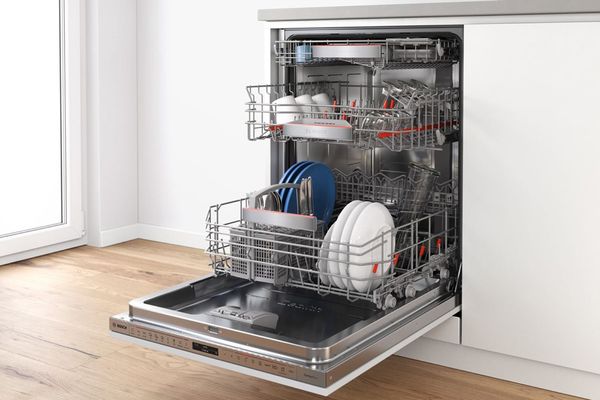
- Basic Racks: The racks might feel less substantial and won’t have the fancy adjustable tines or a smooth-gliding third rack for cutlery. Most will have a standard silverware basket in the bottom rack.
Non-Negotiable Features in the Best Budget Dishwasher
Even when you’re saving money, there are some features you shouldn’t compromise on. These are the workhorse functions that ensure you’re getting a machine that actually cleans well and is easy to live with.
- Soil Sensor (or “Auto” Cycle): This is a game-changer and, thankfully, has become standard on most models, even budget ones. The sensor detects how dirty your dishes are and automatically adjusts the cycle time and water usage accordingly. This not only improves cleaning performance but also saves water and energy, a key aspect of dishwasher energy efficiency.
- NSF-Certified Sanitize Option: This is crucial for peace of mind. The sanitize cycle uses a final high-temperature rinse to kill 99.9% of common household bacteria. It’s a must-have for families with young children or anyone concerned with hygiene.
- Heated Dry Option: While some budget models rely on condensation drying, having a heated dry option is a major convenience. It ensures your dishes, especially plastics, come out dry and ready to be put away.
- ENERGY STAR Certification: Look for this label. An ENERGY STAR certified dishwasher uses significantly less water and electricity than older models, saving you money on your utility bills over the life of the appliance. It’s a perfect example of a smart long-term investment.
|
Our Picks for the Best Dishwasher in 2026
As an Amazon Associate, we earn from qualifying purchases.
|
||
| Num | Product | Action |
|---|---|---|
| 1 | AIRMSEN Countertop Dishwasher - 8 Programs and 3 Useful Functions, Integrated Water Softener, Delayed Start, Child Lock, No Hookup Needed, Portable Mini Size for Home, Apartments & RVs |

|
| 2 | EUHOMY Countertop Dishwasher Portable with 6 Programs, 5L Built-in Water Tank for Apartments & RV, 167℉ High-Temp, No Hookup Needed, Mini Dishwasher with Baby Care, Air Dry/Quick/ECO/Fruit/Normal Mode |
|
| 3 | EUHOMY Countertop Dishwasher Portable with 6 Programs, 5L Built-in Water Tank for Apartments, 167℉ High-Temp, No Hookup Needed, Mini Dishwasher with Baby Care, Air Dry/Quick/ECO/Fruit/Normal, White |
|
| 4 | BLITZHOME Portable Dishwasher Countertop, WIFI Smart Dishwasher, Compact Dishwashers with 5L Built-in Water Tank, 6 Programs, 360° Dual Spray, High-Temp& Air-Dry Function, Fruit Cleaning |
|
| 5 | COMFEE\' Portable Mini Dishwasher Countertop with 5L Built-in Water Tank for Apartments& RVs, No Hookup Needed, 6 Programs, 360° Dual Spray, 162℉ High-Temp& Air-Dry Function |
|
| 6 | NOVETE Portable Countertop Dishwashers, Compact Dishwashers with 5L Built-in Water Tank & Inlet Hose, 5 Washing Programs, Baby Care, Air-Dry Function and LED Light for Small Apartments |
|
| 7 | AIRMSEN Portable Countertop Dishwashers, 5 Washing Programs Mini Dishwashers with 5 L Built-in Water Tank and Double-layered Glass Door, No Hookup Needed for Home, Apartments & RVs |
|
| 8 | AIRMSEN Portable Countertop Dishwashers, 5 Washing Programs Mini Dishwashers with 5 L Built-in Water Tank and Double-layered Glass Door, No Hookup Needed for Home, Apartments & RVs |
|
| 9 | COMFEE\' Portable Dishwasher Countertop with 5L Built-in Water Tank, No Hookup Needed, 6 Programs, 360° Dual Spray, 192℉ High-Temp& Air-Dry Function, Mini Dishwasher for RVs, White |
|
| 10 | AIRMSEN Countertop Dishwasher Complete 2-Level Rack, Portable Dishwashers with 5L Built-in Water Tank, 3-Spray Arms & 12H Delay Start, No Hookup Needed, A01, White |
|
“I always tell my clients, don’t get distracted by a dozen wash cycles you’ll never use. Focus on the core cleaning and drying performance. A good budget machine with a soil sensor and a sanitize rinse will outperform a fancy one that’s loaded improperly every single time.” – James Peterson, Certified Appliance Technician
How Can I Get the Most Out of My Budget Dishwasher?
You can make a budget-friendly machine perform like a premium model with a few simple tricks. Owning the best budget dishwasher is as much about how you use it as it is about the machine itself.
Proper loading is half the battle. Seriously. I’ve seen more “broken” dishwashers fixed with a simple lesson on how to load a dishwasher than I can count.
- Don’t Pre-Rinse (Too Much): Scrape off large food particles, but don’t rinse the plates clean. Modern dishwasher detergents are designed with enzymes that need some food soil to cling to and work effectively.
- Face Dishes Inward: Place dirtier items facing the center where the spray arm is most effective.
- Don’t Block the Sprayers: Make sure tall pans or utensils aren’t blocking the spray arms from spinning freely. Give them a little flick with your finger before starting the cycle.
- Use a Rinse Aid: This is non-negotiable, especially with plastic tubs. Rinse aid helps water sheet off dishes, which dramatically improves drying performance and prevents spotting.
- Clean Your Filter Regularly: This is the single most important dishwasher maintenance task. A clogged filter restricts water flow, leading to dirty dishes and potential odors. It only takes two minutes once a month.
A Quick Comparison: Budget vs. Premium
| Feature | Typical Budget Dishwasher | Typical Premium Dishwasher |
|---|---|---|
| Price Range | $350 – $600 | $800 – $1500+ |
| Tub Material | Plastic or Hybrid | Stainless Steel |
| Noise Level | 50 – 59 dBA | 38 – 48 dBA |
| Racks | Standard, basic adjustability | Smooth-glide, adjustable tines, third rack |
| Drying | Heated Dry, Condensation | Advanced options (AutoAir, CrystalDry) |
| Special Features | Basic cycles, Sanitize | Bottle jets, Wi-Fi, steam, interior lights |
Frequently Asked Questions (FAQ)
Here are some of the most common questions I get about finding an affordable dishwasher.
Is a more expensive dishwasher always better at cleaning?
Not necessarily. Most modern dishwashers, including budget models, do a very good job of cleaning. The price increase is often for quieter operation, more flexible loading options (like a third rack), and specialty cycles. The raw cleaning power is often comparable for everyday loads.
How long should a budget dishwasher last?
With proper care and maintenance, a good quality budget dishwasher should last you about 8 to 10 years. The key is regular filter cleaning and addressing any small issues before they become big problems.
Are plastic dishwasher tubs bad?
Not at all! They are simply more cost-effective. The main downsides are that they can be more prone to staining (especially from tomato sauce) and don’t dry as well as stainless steel, which retains heat. Using a rinse aid largely mitigates the drying issue.
Is a third rack worth paying more for?
For many people, yes. A third rack provides a dedicated space for long, flat items like spatulas, knives, and lids, freeing up a lot of room in the other racks. While it’s a feature you typically give up on the best budget dishwasher models, it’s a significant quality-of-life improvement.
Can I install a dishwasher myself?
If you are comfortable with basic plumbing and electrical work, it’s a manageable DIY project. However, if you have any doubts, hiring a professional is a wise investment to prevent leaks or electrical issues down the road.
The Final Verdict
The hunt for the best budget dishwasher doesn’t have to be a journey of compromise and disappointment. By focusing on core performance—a reliable soil sensor, an effective sanitize cycle, and good drying capabilities—you can find a machine that will be a dependable kitchen ally for years to come. Remember that a little bit of user know-how, from proper loading to simple monthly maintenance, can elevate the performance of any machine. You don’t need to spend a fortune to win the war against dirty dishes; you just need to shop smart.