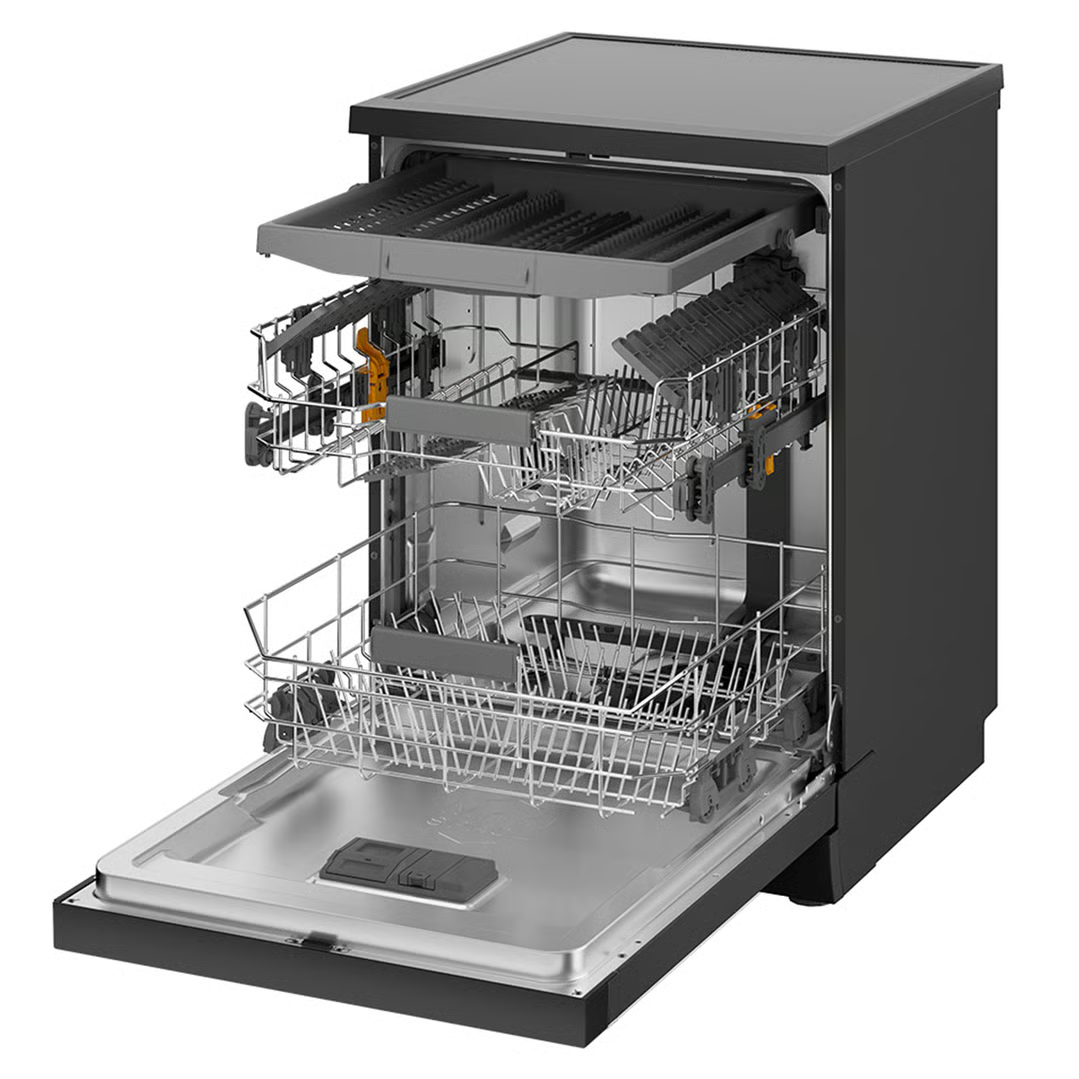
The best 18-inch dishwashers for small kitchens offer powerful cleaning in a compact design, typically holding 8 to 10 place settings while fitting into smaller spaces than standard 24-inch models. These slimline dishwashers are ideal for apartments, condos, or older homes, providing full functionality without sacrificing valuable cabinet space.
Why an 18-Inch Dishwasher is Your Small Kitchen’s Hero
When you’re working with limited square footage, every inch counts. A standard 24-inch dishwasher can feel like a behemoth, eating up valuable cabinet space you just don’t have. An 18-inch model, often called a “slimline” dishwasher, slides into a smaller cutout, offering the full power and convenience of its larger sibling without the spatial sacrifice.
Think of it this way: it’s the difference between a bulky SUV and a nimble city car. Both get you where you need to go, but one is designed specifically for navigating tight spots with ease. These compact powerhouses are perfect for:
- Apartments and condos
- Older homes with non-standard kitchen layouts
- Accessory Dwelling Units (ADUs) or in-law suites
- Anyone who wants to add a dishwasher without a full kitchen remodel
What Defines the Best 18 Inch Dishwasher for a Small Kitchen?
Choosing the right model goes beyond just measuring the space. You’re making an investment, and you want it to perform. As someone who has tested, installed, and troubleshooted countless dishwashers, I can tell you the key features that separate the “good enough” from the “truly great.”
Capacity and Racking: It’s Bigger Than You Think
The number one question I get is, “Will it actually hold my dishes?” Absolutely. Most 18-inch dishwashers can comfortably hold 8 to 10 standard place settings. The secret lies in smart design.
- Adjustable Racks: Look for models with an adjustable upper rack. This simple feature allows you to lower it for tall glasses or raise it to fit large pots and pans in the bottom rack.
- Third Rack: Some premium models offer a third rack for silverware and small utensils. This frees up a ton of space in the lower rack, making it a surprisingly impactful feature.
- Fold-Down Tines: These allow you to customize the layout for bulky items like mixing bowls or oddly shaped platters.
Noise Level (dBA): Don’t Let Your Dishwasher Shout at You
In a small living space, a loud appliance can be incredibly disruptive. Dishwasher noise is measured in decibels (dBA). Here’s a quick guide:
- Above 50 dBA: Noticeably loud. You’ll know it’s running.
- 45-50 dBA: The sound of a quiet conversation. A good standard.
- Below 45 dBA: Whisper-quiet. You might have to check if it’s even on.
For open-plan kitchens or apartments, I strongly recommend aiming for a model rated at 47 dBA or lower. It’s a small premium to pay for peace and quiet.
Cleaning Performance and Smart Cycles
|
Our Picks for the Best Dishwasher in 2026
As an Amazon Associate, we earn from qualifying purchases.
|
||
| Num | Product | Action |
|---|---|---|
| 1 | NOVETE Portable Countertop Dishwashers, Compact Dishwashers with 5L Built-in Water Tank & Inlet Hose, 5 Washing Programs, Baby Care, Air-Dry Function and LED Light for Small Apartments |

|
| 2 | AIRMSEN Countertop Dishwasher Complete 2-Level Rack, Portable Dishwashers with 5L Built-in Water Tank, 3-Spray Arms & 12H Delay Start, No Hookup Needed, A01, White |
|
| 3 | AIRMSEN Countertop Dishwasher - 8 Programs and 3 Useful Functions, Integrated Water Softener, Delayed Start, Child Lock, No Hookup Needed, Portable Mini Size for Home, Apartments & RVs |
|
| 4 | COMFEE\' Portable Mini Dishwasher Countertop with 5L Built-in Water Tank for Apartments& RVs, No Hookup Needed, 6 Programs, 360° Dual Spray, 162℉ High-Temp& Air-Dry Function |
|
| 5 | AIRMSEN Portable Countertop Dishwashers, 5 Washing Programs Mini Dishwashers with 5 L Built-in Water Tank and Double-layered Glass Door, No Hookup Needed for Home, Apartments & RVs |
|
| 6 | COMFEE\' Portable Dishwasher Countertop with 5L Built-in Water Tank, No Hookup Needed, 6 Programs, 360° Dual Spray, 192℉ High-Temp& Air-Dry Function, Mini Dishwasher for RVs, White |
|
| 7 | AIRMSEN Portable Countertop Dishwashers, 5 Washing Programs Mini Dishwashers with 5 L Built-in Water Tank and Double-layered Glass Door, No Hookup Needed for Home, Apartments & RVs |
|
| 8 | EUHOMY Countertop Dishwasher Portable with 6 Programs, 5L Built-in Water Tank for Apartments, 167℉ High-Temp, No Hookup Needed, Mini Dishwasher with Baby Care, Air Dry/Quick/ECO/Fruit/Normal, White |
|
| 9 | EUHOMY Countertop Dishwasher Portable with 6 Programs, 5L Built-in Water Tank for Apartments & RV, 167℉ High-Temp, No Hookup Needed, Mini Dishwasher with Baby Care, Air Dry/Quick/ECO/Fruit/Normal Mode |
|
| 10 | BLITZHOME Portable Dishwasher Countertop, WIFI Smart Dishwasher, Compact Dishwashers with 5L Built-in Water Tank, 6 Programs, 360° Dual Spray, High-Temp& Air-Dry Function, Fruit Cleaning |
|
A dishwasher’s primary job is to clean. Modern slimline models are packed with technology to do this flawlessly.
- Soil Sensors: This is a non-negotiable feature. The dishwasher uses sensors to detect how dirty the water is and automatically adjusts the cycle time and water usage accordingly. It saves energy and ensures a perfect clean every time.
- Sanitize Cycle: Essential for families with young children or anyone concerned with hygiene. This cycle uses a high-temperature rinse to kill 99.9% of common household bacteria.
- Specialty Cycles: Look for options like a “Quick Wash” for lightly soiled dishes or a “Pots & Pans” cycle with spray jets powerful enough to tackle baked-on food.
John Carter, a veteran appliance technician with over 20 years of experience, often tells his clients: “Forget extensive pre-rinsing. Modern dishwashers need some food soil for their sensors and detergents to work effectively. Just scrape off the large chunks and let the machine do its job. You’ll save water and get cleaner dishes.”
Energy and Water Efficiency
A great dishwasher saves you more than just time; it saves you money on utility bills. Look for the ENERGY STAR certification. These models are independently certified to use less water and electricity than standard models, which is good for your wallet and the planet. Many people are surprised to learn that using an ENERGY STAR certified dishwasher is significantly more water-efficient than washing the same number of dishes by hand.
A Quick Comparison of Popular 18-Inch Dishwasher Features
To help you visualize the options, here’s a typical comparison of what you might find on the market.
| Feature | Entry-Level Model | Mid-Range Model | Premium Model |
|---|---|---|---|
| Noise Level (dBA) | 50-55 dBA | 46-49 dBA | 42-45 dBA |
| Tub Material | Plastic or Hybrid | Stainless Steel | Stainless Steel |
| Racking System | Basic, non-adjustable | Adjustable upper rack | 3rd rack, fold-down tines |
| Wash Cycles | 3-4 basic cycles | 5-6 cycles with soil sensor | 7+ cycles, specialized jets |
| Drying | Heated Dry | Heated Dry + Fan Assist | Condensation or Zeolite Dry |
| Price Range | $500 – $700 | $700 – $1000 | $1000+ |
Pro Tips: Loading Your 18-Inch Dishwasher for Maximum Effect
Getting the most out of your compact dishwasher often comes down to technique. It’s a bit like a game of Tetris.
- Bottom Rack First: Place your largest and dirtiest items here. Plates should face the center spray arm. Pots, pans, and bowls should be angled downwards for optimal water exposure.
- Top Rack Strategy: This is for smaller items like glasses, mugs, and small bowls. Place glasses between the tines, not over them, to prevent water spots. Ensure nothing is blocking the upper spray arm from rotating freely.
- Utensil Basket: Mix your silverware! Spoons should not “spoon” together. Alternate forks, spoons, and knives (points down for safety) to ensure water can reach every surface. If you have a third rack, lay them flat.
- Don’t Overcrowd: The biggest mistake people make. Water needs to circulate freely. If you have to force an item in, it’s better to leave it for the next load. Check out our detailed guide on how to load a dishwasher correctly for more tips.
Common Questions About 18-Inch Dishwashers
Are 18-inch dishwashers less powerful than 24-inch models?
No, not at all. The best 18 inch dishwasher for small kitchen use the same motor and pump technology as their full-sized counterparts. They deliver the same cleaning power and water pressure, just within a more compact space.
How much do 18-inch dishwashers cost to install?
Installation costs are generally the same as for a standard 24-inch model, assuming you have the existing plumbing and electrical connections. If you’re creating a new space for it, costs will be higher.
Do I need special detergent for a compact dishwasher?
You can use any high-quality dishwasher detergent. Pods, powders, and gels all work well. For best results, always use a rinse aid, which helps with drying and prevents water spots, especially if you have hard water.
What’s the difference between a stainless steel and a plastic tub?
A stainless steel tub is a sign of a higher-quality machine. It’s more durable, resists stains and odors better, and can handle higher water temperatures, which aids in both cleaning and drying. While more expensive, it’s an investment in longevity.
Can I install an 18-inch dishwasher myself?
If you have experience with plumbing and electrical work, it is a manageable DIY project. However, due to the risk of water leaks and electrical hazards, we always recommend hiring a licensed professional for a worry-free installation.
The Final Verdict
Choosing the best 18 inch dishwasher for small kitchen living is a powerful move towards a more efficient and enjoyable home. You don’t have to sacrifice performance for size. By focusing on key features like a low dBA rating, a stainless steel tub, flexible racking, and smart sensor technology, you can find a compact appliance that works just as hard as you do. Say goodbye to the post-meal cleanup dread and hello to more time for the things you love.
Frequently Asked Questions
Are 18-inch dishwashers less powerful than 24-inch models?
No, 18-inch dishwashers are not less powerful than 24-inch models. They utilize the same motor and pump technology as full-sized counterparts, delivering identical cleaning power and water pressure within a more compact footprint.
How much does it cost to install an 18-inch dishwasher?
Installation costs for an 18-inch dishwasher are generally comparable to those for a standard 24-inch model, assuming existing plumbing and electrical connections are in place. If a new space needs to be created, costs will be higher due to additional work.
Do compact dishwashers require special detergent?
Compact dishwashers do not require special detergent; any high-quality dishwasher detergent, whether pods, powders, or gels, will work effectively. For optimal drying and to prevent water spots, especially with hard water, always use a rinse aid.
What is the difference between a stainless steel and plastic dishwasher tub?
A stainless steel tub indicates a higher-quality dishwasher, offering superior durability, resistance to stains and odors, and the ability to withstand higher water temperatures for better cleaning and drying. While more expensive, it represents a long-term investment compared to plastic tubs.
Can I install an 18-inch dishwasher by myself?
Installing an 18-inch dishwasher can be a manageable DIY project if you have prior experience with plumbing and electrical work. However, due to potential risks like water leaks and electrical hazards, it is always recommended to hire a licensed professional for a safe and worry-free installation.
Load an 18-Inch Dishwasher for Maximum Effect
Optimize your compact dishwasher's performance by following these steps for efficient loading, ensuring every item gets clean.
Place your largest and dirtiest items, such as plates, pots, and pans, on the bottom rack. Ensure plates face the center spray arm and pots/bowls are angled downwards for optimal water exposure.
Reserve the top rack for smaller items like glasses, mugs, and small bowls. Position glasses between the tines to prevent water spots and verify that nothing obstructs the upper spray arm's rotation.
Mix your silverware in the utensil basket, avoiding 'spooning' to allow water to reach all surfaces. Alternate forks, spoons, and knives (points down for safety). If your model has a third rack, lay utensils flat there.
Do not overcrowd the dishwasher. Water needs to circulate freely to clean effectively. If an item requires force to fit, it's better to save it for the next load to ensure proper washing.
Get our weekly buyer guide
Practical specs, not advice. Unsubscribe anytime.
I bought an 18-inch dishwasher after reading about how they’re ideal for condos. While it definitely fits perfectly, I’ve noticed it sometimes struggles with really caked-on food, even on the heavy-duty cycle. It’s fine for everyday dishes, but I often have to pre-rinse more than I’d like. Still, it’s better than hand washing everything.
I was really struggling to find a dishwasher that would fit in my tiny apartment kitchen. The mention of ‘slimline’ dishwashers in the post was exactly what I needed to hear. I ended up getting an 18-inch model and it’s been a game-changer. It cleans just as well as the bigger ones I’ve had, and I still have my cabinet space!
My old home has a really awkward kitchen layout, and a standard 24-inch dishwasher was never an option. I appreciated the comparison to a ‘nimble city car’ – that really resonated with me. I found a great 18-inch model that holds 9 place settings, which is perfect for my small family. It’s quiet and gets dishes sparkling.
This post was super helpful in making my decision! I live in an older home with limited square footage, and the idea of not sacrificing valuable cabinet space was key. My new compact dishwasher handles 8 place settings easily and honestly, it’s more than enough for me and my partner. Best kitchen upgrade in years!